Where the Mile Catches Its Breath: A Wander Through Belgrave’s Back Lanes
Belgrave Road gets the attention. Quite right too: the lights, the sweet counters, the queues outside the snack shops, the windows full of gold and silk. But the Golden Mile is not really a single road. It is a working neighbourhood with a busy front room, and the back streets are where much of the actual life happens. If you only ever walk the main drag, you see the performance. Turn a corner and you see the machinery.
This is a short walk, not a route march. It is best done on a weekday morning or a quiet afternoon, when the service lanes are busy but not frantic and the shopkeepers have time for a nod. Bring decent shoes, a bit of curiosity and no particular schedule.
Start by stepping back
Begin near the Belgrave Road end of the mile and take the first ordinary-looking side street that heads away from the main shops. There is no single correct turning. The point is to put the Golden Mile behind you for ten minutes and look at what supports it.
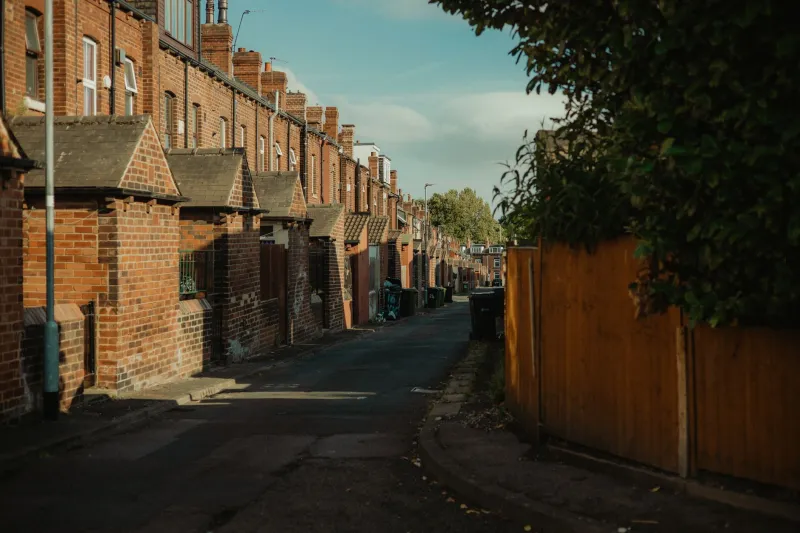
The first thing you notice is the change in sound. The main road is horns, chatter, shop alarms and the hiss of a bus door. Two streets back it is wheelie bins, a radio in a workshop, somebody sweeping a step. The terraces here tell the area’s older story: Victorian and Edwardian housing built for workers, later adapted for shops, offices, temples and halls. The architecture is not grand, but it is honest. Look at the brickwork, the shallow bays, the painted stonework, the extensions bolted on as families and businesses grew.
The workshop doors
Keep an eye out for open doors. Not every unit off Belgrave Road is a shop. Some are workshops, stockrooms, tailors’ rooms, repair bays and small wholesalers. You might see a sewing machine going in a front room, a van being loaded with boxes, or a carpenter measuring up a counter for one of the main-road restaurants.
This is the part of the mile that rarely makes it into photographs. The Golden Mile’s reputation is built on food and celebration, but it is also a supply chain. Behind the sweet counters are boxes, ledgers, deliveries and people who start early. The back lanes are where those things move. A loading bay may not be beautiful, but it is heritage in its own way: a reminder that this is a place of work, not just a backdrop.
Small temples and quiet corners
One of the most underrated aspects of Belgrave’s side streets is the way faith sits quietly among the houses. Converted buildings, former community rooms and modest temple spaces appear without fanfare. You may spot a doorway, a shoe rack, a small noticeboard or a glimpse of colour through a window. These are not visitor attractions in the theme-park sense. They are places of worship and community, and they deserve the usual respect: quiet voices, no photography unless invited, and no wandering into spaces that are clearly private.
That said, even from the pavement they add to the walk. They show how the area has layered itself over time: Victorian housing, post-war migration, growing communities, new needs. The Golden Mile’s heritage is often told through the main road’s shopfronts, but the back streets show how those communities actually settled in.
Halls, benches and a hidden cup of chai
Look out for community halls and neighbourhood centres. Some are obvious, with noticeboards and double doors. Others are tucked into terraces and only reveal themselves when a function is on: chairs being carried in, a marquee van outside, the sound of a wedding playlist being tested at 11am. These halls are the area’s social plumbing. They host classes, meetings, family functions and the kind of events that never get a listing but keep a neighbourhood connected.
And yes, there are food stops. Not the famous ones. The ones with a few chairs, a counter and a steady stream of regulars. A backstreet bakery may be selling hot puri or a tray of something fresh from the oven. A community café might do a simple thali at lunch. The pleasure is not in ticking off a name. It is in sitting down for twenty minutes and watching the mile’s support staff come and go: drivers, shop assistants, grandparents, school-run parents, someone popping in for a takeaway chai before a shift.
Why the lanes matter
Belgrave Road is often described as a place to eat, shop and celebrate. All true. But the backstreets explain how that happens. They hold the stock, the workshops, the prayer rooms, the halls, the deliveries and the quiet domestic life that makes a busy commercial street possible. They also show the area’s history more clearly than any polished shopfront: modest buildings reused, extended and adapted by each generation.
So next time you visit the Golden Mile, build in a small detour. Walk one side street up and another one back. Keep your eyes open, your voice down and your assumptions loose. The main road will still be there when you return, louder than ever. The lanes behind it are where the mile catches its breath.