The Mill Behind the Menu: How Leicester’s Textile Trade Shaped Belgrave Road
Belgrave Road is usually introduced through its senses: the smell of frying onions, the rattle of a sweet counter, the bright press of shopfronts after dark. That is the Golden Mile most visitors know. But look above the menus and beyond the till, and another Leicester story is still visible. The street’s food and retail scene grew in a city built on cloth, and the textile trade is part of the reason Belgrave Road looks and works the way it does.
The city that made clothes
Leicester’s modern identity was stitched together in hosiery factories, knitwear workshops and garment units. By the early twentieth century, the city was known across the country for socks, stockings, jumpers and the small firms that supplied them. Belgrave and the surrounding streets expanded with terraced housing for people who worked in those trades. The area was never a grand civic showcase. It was a practical neighbourhood of workshops, corner shops and bus routes into the centre.
By the middle of the century, Leicester’s textile employers were recruiting heavily. Post-war labour shortages brought workers from India, Pakistan and later East Africa, especially after the Ugandan Asian expulsion in 1972. Many arrived with textile experience; others learned on the factory floor. They worked in hosiery, knitwear, sewing rooms and finishing shops, often on shifts that left little time for anything else. That labour is part of the Golden Mile’s foundation, even if it rarely appears on the street’s menus.
From the factory floor to the shop floor
From the 1970s onwards, Leicester’s textile industry began to change. Competition, restructuring and later closures pushed many workers out of large factories. Some households responded with small-scale enterprise: alterations from a back room, a market stall, a fabric counter, a grocery sideline, a takeaway run from a family kitchen. The skills were not abandoned. They were repackaged.
Belgrave Road had the ingredients for that shift. There were empty or affordable units, terraced housing nearby, good bus links and a growing local population looking for familiar food, cloth and services. A sewing machine could become a tailoring business. A van route could become a fabric shop. A recipe could become a lunch counter. The street’s distinctive mix of restaurants, grocers, jewellers and clothes shops did not appear from nowhere. It grew from a practical, unsentimental response to work, migration and the need to make a living.
Cloth still on the shelves
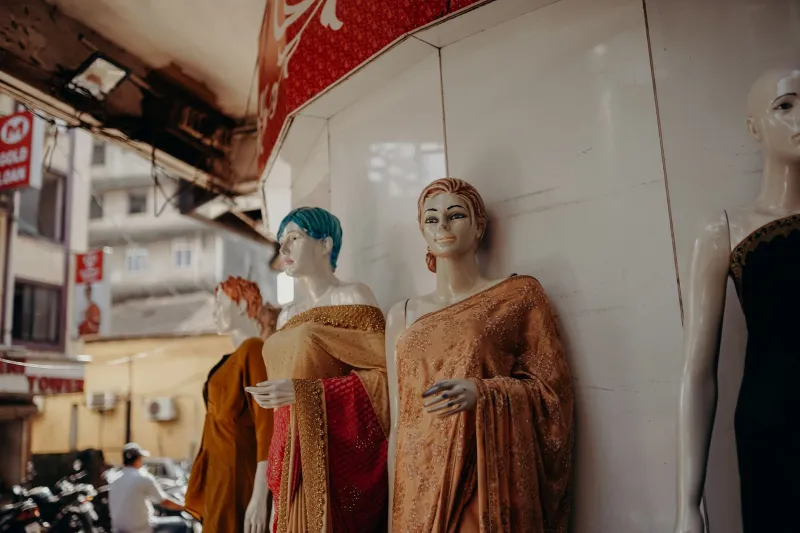
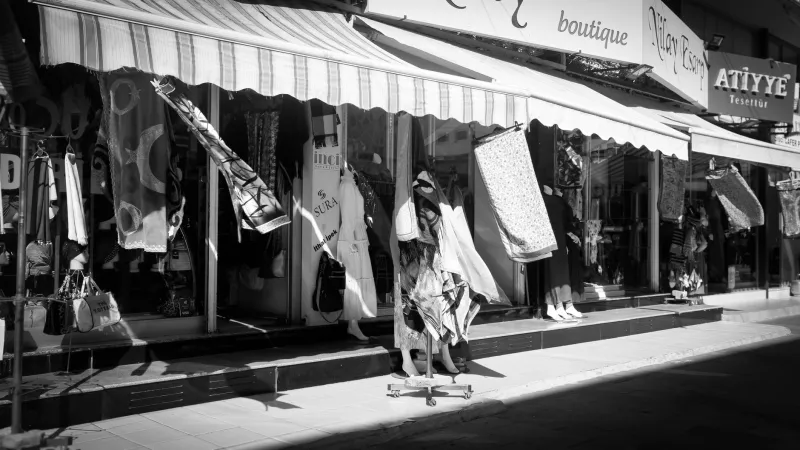
Walk the Mile in 2026 and the textile link is not hidden. Fabric shops still sell bolts of cloth, lace, trimmings and lining materials. Tailors and alteration services sit close to restaurants. Bridal and occasion-wear shops depend on the same skills of cutting, fitting and finishing that once filled Leicester’s garment factories. Gold jewellery shops, sweet counters and grocers may look like a different world, but they belong to the same ecosystem of family firms, repeat customers and tight supply networks.
Some shop interiors still carry the feel of older commercial units: deep shelves, strip lighting, a back room that does more work than the front window suggests. These are not formal heritage attractions. They are working businesses. That is exactly why they matter. The Golden Mile’s heritage is not only in plaques or listed buildings. It is in the continued use of practical skills that Leicester once organised around on a much larger scale.
The kitchen as a second workshop
Food businesses on Belgrave Road are often discussed as if they sit apart from the textile story. In reality, the two are closely related. Restaurants, sweet shops and snack counters grew from the same family-labour model that sustained small garment firms. Long hours, repeat custom, word-of-mouth reputation and a willingness to serve several markets at once were common to both.
As factory work became less secure, food became a route into self-employment for some families. Workers and shoppers needed lunch. Families needed groceries and ingredients. Community events needed caterers and sweets. The street’s food scene expanded because it served a local population first, not because it was waiting for a tourism campaign. That local grounding is what makes the Golden Mile feel like a high street rather than a themed attraction.
Archives, directories and memories
The evidence for this history is scattered but traceable. Trade directories in Leicester’s local studies collections show how Belgrave Road’s businesses changed across the twentieth century. Factory records, census returns and planning documents fill in the industrial background. Oral history collections and community archives hold the memories of people who did shifts in hosiery firms before opening shops of their own.
Those sources rarely tell a single tidy story. They show a street that was always adapting. Early twentieth-century Belgrave had shops for daily needs. Post-war migration changed the customer base and the business mix. Factory closures in the 1970s and 1980s pushed new enterprises into view. By the 1990s, the Golden Mile had become a recognised centre for South Asian food and retail in Leicester. None of that happened overnight, and none of it happened without the textile economy in the background.
What heritage means now
Heritage debates often focus on buildings worth protecting. Belgrave Road deserves that attention too, especially its shopfronts and older commercial frontages. But the Mile’s heritage is also economic and social. It lives in the way a fabric shop still serves a wedding party, a tailor still takes in a last-minute alteration, a restaurant still feeds people who have just finished work.
In 2026, Leicester’s textile industry is much smaller than it once was. The Golden Mile carries some of its skills in different forms. A heritage trail that connected the street’s fabric shops, tailors, food counters and community buildings would tell a fuller story than a simple food crawl. It would also remind visitors that Belgrave Road was not built by branding. It was built by work.
The next time you stand on the Mile waiting for a table, look at the cloth in the window and the counter behind the till. The ladles and the looms are not such distant relatives. They belong to the same Leicester story, and it is still being written on Belgrave Road.