The Mile After the Rush: Why January Lets Belgrave Road Breathe
Belgrave Road is usually described in superlatives. Loudest, brightest, busiest. The Golden Mile earns all three, especially around Diwali and Christmas, when the lights are on, the sweet counters are stacked high and every second person seems to be carrying a box of mithai. But there is another version of the street, and it arrives quietly in January.
The street with the volume turned down
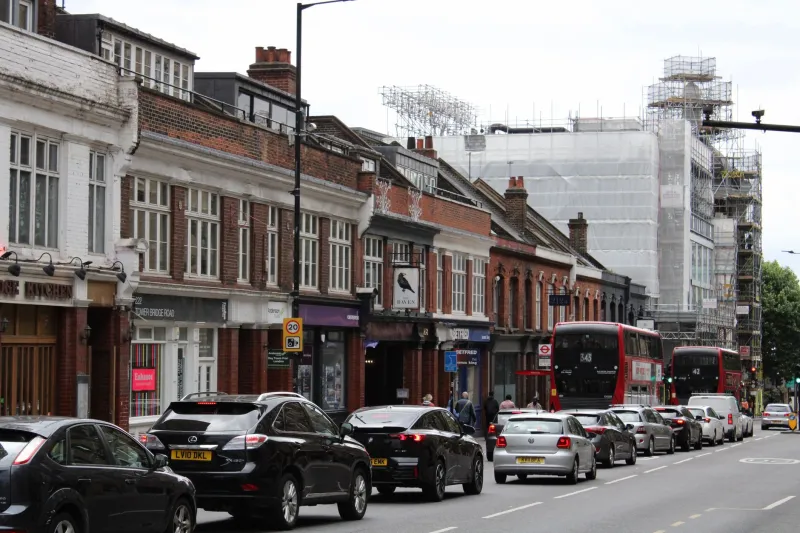
Come to Belgrave Road on a cold weekday in January and the first thing you notice is the space. Not emptiness — this is still a working high street — but room to move. The queues outside the most popular places have shortened. The pavements are clear. The shop windows are still full, but the crowds pressing against them have gone home.
This is the month when the Golden Mile stops performing and starts going about its business. Locals pop out for vegetables and chai. A tailor stands in a doorway with his arms folded. Someone sweeps the front of a shop that has probably been swept every morning for thirty years. The famous illuminations are off, and in their place you get ordinary winter light, low and grey, falling on brick and glass.
It is not the version of Belgrave Road that ends up on postcards. It might be the more revealing one.
A slow winter lunch worth planning around
January is made for the kind of lunch you do not rush. Pick a thali house or a café with a handwritten menu and sit near the window. Order the standard thali, or a plate of something hot and simple, and let it arrive in its own time. The pleasure is not novelty. It is the ordinary rhythm of a place that knows what it is doing.
A winter lunch on the Mile should include chai, ideally after the food rather than with it. It should probably include something fried and something sweet. If you are on your own, take a book. If you are with someone, talk about something other than where to eat next. The street outside will keep moving, but at a pace you can follow.
And because it is January, you can walk into a mithai shop afterwards without queuing around the block. Buy a small box for later. Ask what is fresh. The answer may change your plans for the rest of the afternoon.
What you can see when nobody is in the way
Belgrave Road’s heritage is often talked about in terms of festivals, food and faith. All of that matters. But the street also has a built history that is easy to miss when the pavements are packed. In January, you can stand back and look up.
Above the ground-floor glitter — the saree displays, the jewellers’ windows, the sweet counters — are the upper storeys of Victorian and Edwardian terraces. Brickwork, sash windows, stone lintels, decorative cornices. Some shopfronts have been inserted into older buildings with care; others less so. Here and there you can still make out the ghost of an older sign, or a bit of detailing that has survived decades of change.
This is not a museum street. It is a working high street that has adapted, rebuilt and reused its buildings. But January, with its thinner crowds and flatter light, makes that layering easier to read. You notice how the Golden Mile grew into its buildings rather than replacing them entirely. You notice the roofs, the chimneys, the bits between the shops.
The conversations you only get in the quiet
There is a practical reason to visit Belgrave Road in January: people have time to talk. The shopkeeper who is too busy to chat in November will lean on the counter in January. The person behind the mithai counter will tell you which sweets sell at Diwali and which ones are for weddings. The grocer will explain which vegetables are for everyday cooking and which are for a celebration.
These conversations are not a tourist attraction. They are just what happens when a street is not at full tilt. But they are part of what makes the Golden Mile feel like a neighbourhood rather than a destination. January is when that side of the street is most visible.
A short January walk that makes the point
Start at Belgrave Circle and walk towards Melton Road. Cross sides once or twice. Look up at the first-floor windows. Stop for chai. End at a mithai shop and buy something small. That is the whole plan. It should take two hours, maybe less if it is cold.
Along the way, notice the businesses that are not restaurants: the fabric shops, the jewellers, the grocers, the tailors. The Golden Mile is a food street, yes, but it is also a high street in the old sense — a place where people buy things they need and things they are marking. In January, with the festival rush behind it, that working character comes forward.
Why January is the honest month
The Golden Mile does not need spectacle to be worth visiting. The lights are lovely. The crowds are part of the fun. But January offers something different: a chance to see the street as the people who use it every week see it. Slower, quieter, more ordinary. A place where you can eat a long lunch, look up at the architecture and have a proper conversation with the person behind the counter.
Come in January for the space. Stay for the thali. Leave with a box of mithai and the feeling that you have seen Leicester’s Golden Mile with its guard down.