The Golden Mile Menu, Translated: A Vegetarian Ordering Guide
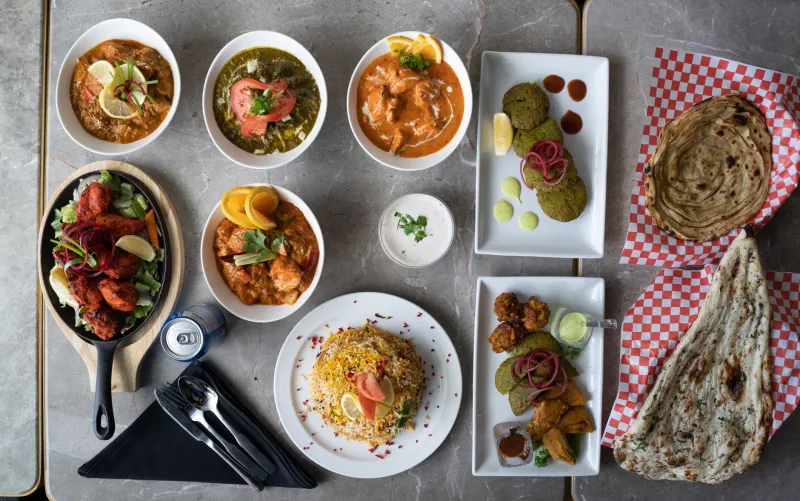
Belgrave Road menus can read like a crossword. You recognise the rice, the bread and the word 'vegetarian', then hit a wall of terms that promise something wonderful but do not explain what arrives on the plate. This is not a list of mithai shops. It is a decoder for the savoury side of the Golden Mile, and for the sweet finish that makes sense of it all.
Chaat is a category, not a dish
Chaat is the broad family of savoury snacks built on contrast: something soft, something crunchy, something tangy, something cool. You will see samosa chaat, papdi chaat and pani puri. Yoghurt, tamarind chutney, green chutney and sev are common supporting actors. Chaat is not usually a main course. Order one to share at the start of a meal, or make it a small stop on its own. Eat it quickly, because the crunch is the point.
Farsan: the Gujarati snack shelf
Farsan is the umbrella term for the fried and steamed snacks that Gujarati kitchens do so well. Dhokla, khaman, patra, kachori, samosa and bhajiya all sit under it. Many shops sell farsan by weight, so you can ask for a small mixed box rather than committing to a full portion. This is the best way to open a meal on Belgrave Road: one farsan selection, one chutney, and a chai while you decide what comes next.
Dhokla and khaman are cousins
Both are steamed from chickpea flour, both are light and spongy, and both are often served with green chutney. Dhokla tends to be slightly tangy; khaman is softer and a little sweeter. Neither is a main course. They are the sort of thing you order while waiting, or alongside a thali. If you have only tried one, try the other and compare.
Undhiyu is a winter order
Undhiyu is a Gujarati mixed vegetable dish, slow-cooked and deeply savoury, often made with beans, aubergine, potato and muthiya. It is associated with winter, so it is worth asking whether it is available rather than assuming it will be on every menu in July. It is not a quick curry. Order it with rotli or puri and treat it as the centre of the meal. If you see it in November, take the hint.
Build a balanced plate
If you are new to the menu, order a thali. It gives you dal, rice, rotli, a sabzi or two, farsan, salad, chaas and usually a sweet, and it teaches you the rhythm of the meal. If you are ordering a la carte, aim for one farsan to share, one dal or kadhi, one sabzi, rice or bread, and something cool on the side. Do not order five fried things and then wonder why the table feels heavy. Gujarati vegetarian food is often sweet-sour as well as spicy, so balance matters more than heat.
Asking about spice without losing the flavour
'Mild' means different things to different kitchens. Ask whether a dish is spicy-hot or just heavily spiced. If you want less heat, say 'kam teekhu' or ask for less chilli rather than no spice at all; the flavour is in the masala, not just the heat. Keep a chaas or lassi nearby. Ask for chilli on the side if you are unsure. Staff are used to explaining dishes, so ask which one is the house favourite rather than guessing from the longest description.
From savoury to sweet
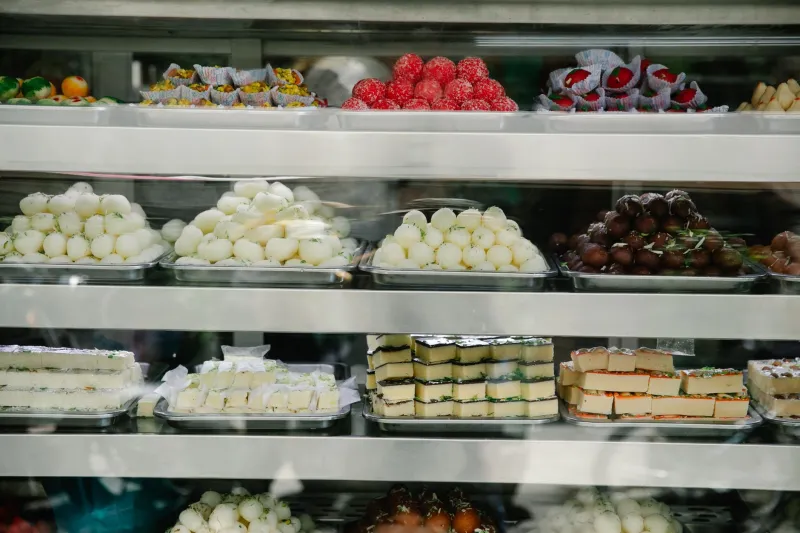
Falooda is the bridge. It is part drink, part dessert: rose syrup, milk, vermicelli, basil seeds and often ice cream. Share one rather than treating it as a personal challenge. Mithai is sold by weight, so ask for 250g rather than a kilo if you are grazing. Jalebi is best eaten fresh and hot. Kulfi is the quiet option. Finish with a chai if you want to reset before leaving.
Drinks and useful phrases
Chaas is the salted buttermilk that cools the meal. Lassi is thicker and often sweet. Masala soda is fizzy, sharp and very good with fried snacks. Useful phrases include 'kam teekhu' for less spicy, 'no coriander' if that is your line, and a simple 'what would you recommend?' Small counters may prefer cash, so keep a note or two handy.
The confident order is not the biggest order. Pick one snack, one main, one bread, one drink and one sweet. Ask what is fresh. The menu is a map, not an exam.