The Street You Hear Before You See: A Listening Walk Along Belgrave Road
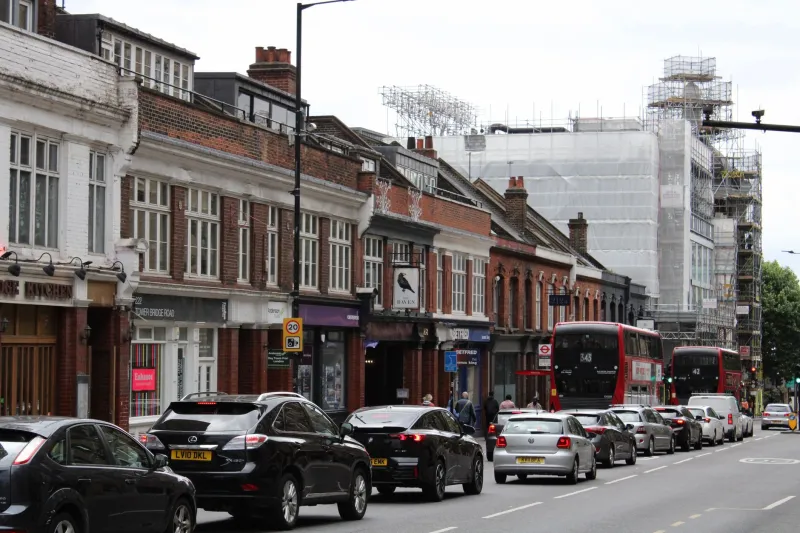
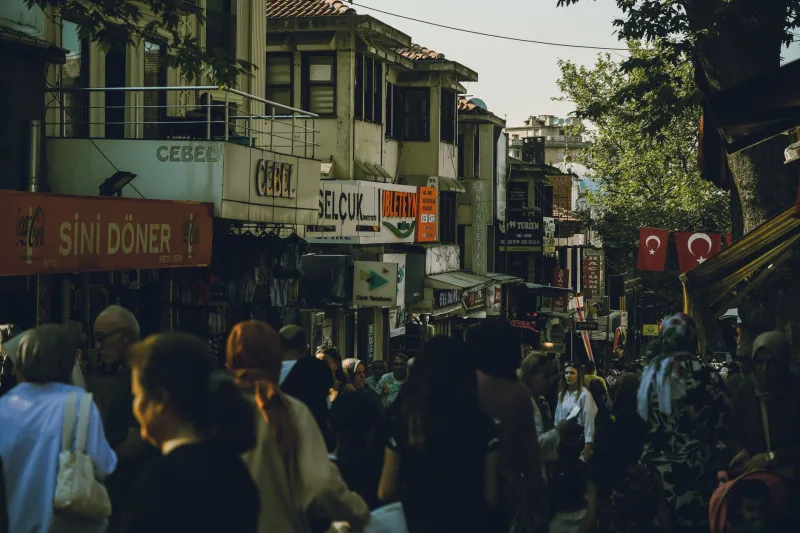
You can arrive on Belgrave Road with a shopping list and leave with a full stomach, but you will miss half the street. The Golden Mile is as much heard as seen: the hiss of a fryer, the rattle of a pressure cooker, a Bollywood chorus spilling out of a sari shop, the recorded voice at the bus stop, the quick exchange at a counter that means far more than 'hello'. In the week after Diwali, with the bulbs still up and the pavements still busy, it is worth walking the road with your ears first.
This is not a silent retreat. Belgrave Road is a working high street, and its soundtrack is the point. Treat this as a gentle route rather than a strict trail. Stop often. Stand still. Let the street come to you.
Start where the buses exhale
Begin at Belgrave Circle, near the bus shelters. Stand to one side for five minutes and listen to the layers: brakes, doors, the announcement telling you which service is due, the shuffle of people moving forward before the bus has fully stopped. It is easy to dismiss this as noise, but it is the rhythm section of the Mile. On a damp November morning it sounds especially clear, every hiss and beep bouncing off the shopfronts.
A busker I meet near the circle one Saturday puts it better than I can. He plays film songs on a small amp, not too loud, and he has learned when to pause. 'The street already has a soundtrack,' he says. 'I just try not to argue with it.' He is right. The best buskers on Belgrave Road do not compete with the traffic. They find the gaps.
The first block: greetings and grills
Walk along Belgrave Road towards the city centre and pay attention to the doorways. This is where the street speaks most directly. A shopkeeper I will call Dev has been behind the same counter for years. He greets regulars with a quick 'kem cho', a 'sat sri akal', or a simple 'hello ji', depending on who walks in. 'You can tell a lot from how someone says good morning,' he says. 'Some people are in a rush. Some want a chat. The greeting does the first bit of the work.'
Behind the greetings come the kitchen sounds. A fryer starts with a low crackle and builds to a steady hum. A pressure cooker lets out a small, insistent rattle. Somewhere in a back room, a steel tray lands on a counter. These are not performative noises. They are the everyday evidence of a street that feeds people all day.
Above the doorways, sari shops and clothes shops add their own layer. Bollywood playback is not simply background music here; it is signage. A familiar song can pull you towards a window before you have even read the name above it. The volume rises and falls from shop to shop, so the effect is less like a playlist and more like a conversation you are walking through.
The side streets carry the bells
Take a short detour off the main road, towards one of the mandirs. The change is immediate. The traffic thins, the pavement narrows, and the sound of the street drops away. If you time it for the morning or early evening, you may hear temple bells: bright, clear, and quickly gone. A priest I speak to outside explains that the bell is not there to entertain passers-by. 'It is part of worship,' he says. 'It calls attention, but not to us. It is for the person praying.'
That is an important distinction on a listening walk. Not every sound on Belgrave Road is there for you. On quieter side streets, if the timing is right, the azaan may drift over from a nearby mosque, distant and slightly blurred by buildings. It is one of the most beautiful sounds on the Mile, and one of the easiest to treat badly. Hear it, yes. Record it without thought, no.
The middle stretch: fryers, pressure cookers and playback
Back on the main road, the middle stretch is where the layers stack up. A Leicester-based sound recordist I will call Anna tells me she likes to stand outside the sweet shops in the afternoon, when the trays are being moved and the doors are open. 'People think a street has one sound,' she says. 'Belgrave Road has a stack. You have the fryer, the traffic, the music, the counter talk, the bus announcement. If you close your eyes, you can still tell where you are.'
She is right. Try it for thirty seconds outside a mithai counter. The fridge hums. A tray slides. Someone laughs. A pressure cooker rattles somewhere behind the wall. The door opens and the Bollywood track from next door leaks in. Then a bus passes and wipes the whole thing clean for a second. The street rebuilds itself.
Stand still here
The best listening spots are not secrets. They are just easy to walk past. The bus shelter at Belgrave Circle is excellent for the full orchestral version of the Mile: announcements, doors, footsteps, greetings, traffic. Outside a sweet shop in the mid-afternoon, you get the domestic sounds of the street: trays, tills, chatter, fryers. A side street near a mandir at dusk gives you bells and birdsong and very little else. On a Saturday late morning, the pavement near the circle often has a bit of music and a lot of family noise.
Best times? Weekday mid-morning, around 10 to 11.30, is good for deliveries and chai conversations. Late afternoon, roughly 4 to 6, is when the school run and the counter greetings overlap. Saturdays are busiest and most varied, but also hardest to hear anything clearly. If you want the bells, go early or at dusk. If you want the street at full volume, go on a Saturday and accept that you will only catch fragments.
How to listen without being a nuisance
A listening walk is not a licence to point your phone at strangers. Ask before you record anyone. Keep the phone low and the screen dim. Do not record worship, prayers, or people at prayer; if you are near a mandir or a mosque, record the street, not the service. Do not block the pavement, especially at bus stops and shop doors. If someone says no, stop immediately. And do not treat the sounds of a working high street as free content. The greetings, the arguments, the kitchen clatter and the family conversations are people's lives, not a sound effects library.
Anna puts it simply: 'A good sound map is made with permission, not just a microphone.' That seems right for Belgrave Road. Listen generously. Record sparingly. Leave the street as you found it, only a little more noticed.
Why hearing the Mile matters
Heritage is usually discussed in terms of buildings, plaques and old photographs. Belgrave Road deserves all of that, but it also deserves a hearing. The sound of the Golden Mile is a living archive: the bells, the azaan, the playback, the fryers, the bus announcements, the quick greeting at the counter. It changes with every new shop and every new bus timetable. Walk it with your ears while it sounds like this.