Why Belgrave Road Is the High Street Model Nobody Bothers to Copy
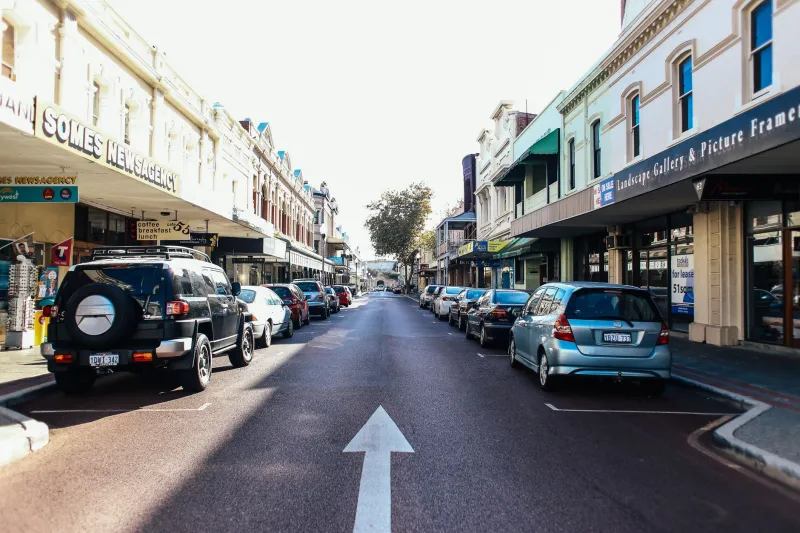
There is a game people play about British high streets. You walk the main drag of almost any town and count the gaps: the bank that became a vape shop, the unit that has been to let so long the board has gone the colour of milky tea. Play it on Belgrave Road and the counting stops after about four minutes, because there is nothing much to count. From Belgrave Circle down towards the city, the units are let, lit and busy. Not all selling the same things, not all open the same hours, but busy.
That is the unglamorous argument of this piece. Leicester's Golden Mile is not a heritage exhibit with a nice bit of food bolted on the side. It is a working high street, and it is one of the better case studies in the country for what a high street can still be when nobody is trying to design it from a strategy document.
What the footfall is actually made of
Walk the road slowly and the pattern becomes obvious. The shops that survive here are the ones where the internet is a poor substitute. Saree shops where the fabric has to be touched and held against a daughter's shoulder. Jewellers who will resize a ring while you wait. Spice merchants who will sell you 200g of something and tell you exactly what to do with it. Tailors, wedding card printers, utensil shops stacked to the ceiling, travel agents sorting visas for a wedding party of forty.
None of that is a novelty. That is just retail doing the thing retail is for: giving people something they cannot get from a courier van. Somewhere along the way, plenty of other high streets decided their job was to sell things people could equally well buy in an out-of-town retail park or on their phone, and then acted surprised when they did not come.
The flats above the shops
Stand back from the pavement and look up. A lot of the buildings on the Mile have people living in them — small flats, family homes, offices above the retail. That matters far more than it sounds.
Occupied upper floors mean eyes on the street, bins that get put out, someone who notices when a shutter is forced. They also mean a landlord with two incomes from one building, which makes it easier to keep rents on the ground floor within reach of a small trader. Compare that with the town centre where the first floor has been storage since 1998 and the whole building is priced on the assumption of a national chain tenant who is never coming.
Belgrave Road did not invent mixed use. It just never stopped doing it.
Food as footfall, not decoration
Every council in the country has now heard that food and drink drives footfall. The usual response is a handful of chain restaurants in a leisure development with a cinema and a multi-storey, which produces crowds between six and nine and tumbleweed at eleven in the morning.
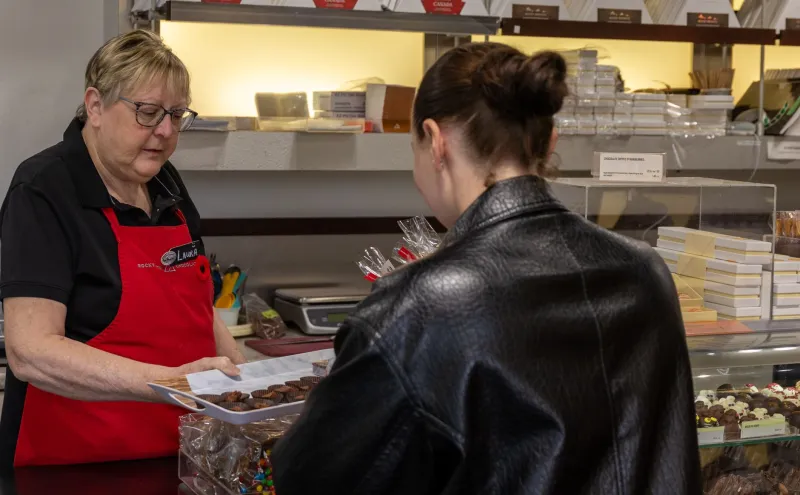
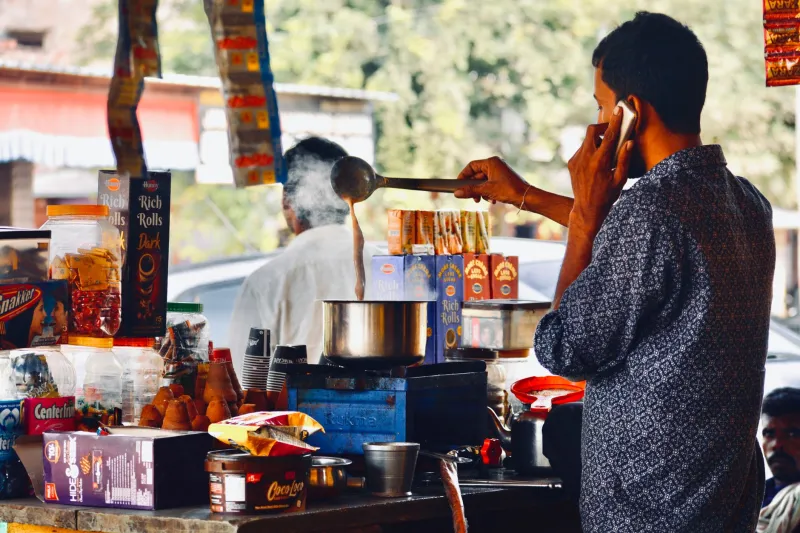
The Mile does it differently, because the food grew out of the shops rather than being parachuted in to save them. A mithai counter is a shop. A chaat stall is a shop with a queue outside it. The restaurants at the top of the road feed families who have come to buy a saree, and the saree shops stay open because people are coming to eat. Rita, who has worked the till at a sweet counter for eleven years, reckons the shop now does more trade on an ordinary Tuesday than it managed across a whole December a decade ago — and puts most of that down to people coming back for dinner and picking up a box on the way home.
The lesson isn't that high streets need more restaurants. It's that a street which stays alive after half five has a reason to exist that a street of daytime-only retail does not.
Cultural confidence beats theming
The Golden Mile is not a themed environment. Nobody put up an arch and hoped for the best. What happened instead is that a street grew around a community that needed it — and because it serves that community properly, everyone else wants a piece of it too. That order of events matters.
You can feel the difference on Diwali night, when the lights go up and half of Leicestershire turns out, but you can feel it just as clearly on a wet Wednesday in February, when the street is doing nothing for visitors at all and is still thriving. Staged high streets always feel as though they are waiting for you. Belgrave Road is not waiting for anybody, which is precisely why people come.
What other places could borrow
Not the sarees. Not the mithai. The conditions:
- Small units at achievable rents. A high street of twenty small units absorbs three failures far better than a high street of four big ones absorbs one.
- Mixed use, protected and encouraged. Flats above shops are not a planning nuisance. They are the business model.
- Evening trade taken seriously. That means licensing that doesn't punish late kitchens, buses that still run at ten, and lighting that makes a pavement feel walkable after dark.
- A street that serves locals first. Visitors are the dividend, not the strategy.
- Room to churn. Short leases, quick changeovers, a bit of mess. A street where nothing has changed in fifteen years is usually a street where nothing is happening.
The honest caveats
None of this is a fairy tale. The pavements are narrow and crowded. Crossing the road is an act of faith. Parking spills into the side streets and irritates the people who live there. Some units are cash-first and some working conditions behind closed doors are not what a poster campaign would claim. And the Mile rests on a particular community, a particular history and a great deal of unpaid family labour — none of which a regeneration consultant can install in a market town in Somerset.
So the takeaway isn't build your own Golden Mile. It's simpler and harder than that: stop designing high streets for the shopper who stopped coming in 2014, and start backing the people who are already there, buying things they actually need, at nine o'clock at night.