The Quiet Code of Belgrave Road: Little Habits That Make You Look Like a Regular
Belgrave Road does not ask for much. It does not demand that you know the difference between kaju katli and mohanthal, or that you can pronounce every item on a thali without pointing. But it does reward a certain kind of visitor: the one who watches the room for thirty seconds before barging in, who knows that a queue can be a conversation, and who understands that asking for extra chai is not a secret handshake but a perfectly normal request.
This is not a list of rigid rules. Think of it as the quiet code of the Mile — the small habits that make a visit smoother, the counter staff happier and your lunch considerably better. Learn a few and you will stop feeling like a visitor.
Start with the counter, not the queue
On a busy Saturday, Belgrave Road can look chaotic. It is not. There is usually a queue, but it may not be a neat British line. People cluster near the till, edge towards the mithai display, or wait by the side for a takeaway bag. The trick is to make eye contact with whoever is serving and let them place you. Hovering silently at the wrong end of the counter is the main reason visitors feel ignored.
If someone older steps forward, let them. If a family is collecting a large order, give them room. And if you are only after a small box of sweets, say so early — it helps the staff slot you in between bigger jobs. The queue is not a test of patience. It is a small social system, and it works best when everyone is slightly aware of everyone else.
Mithai by weight, not by vibe
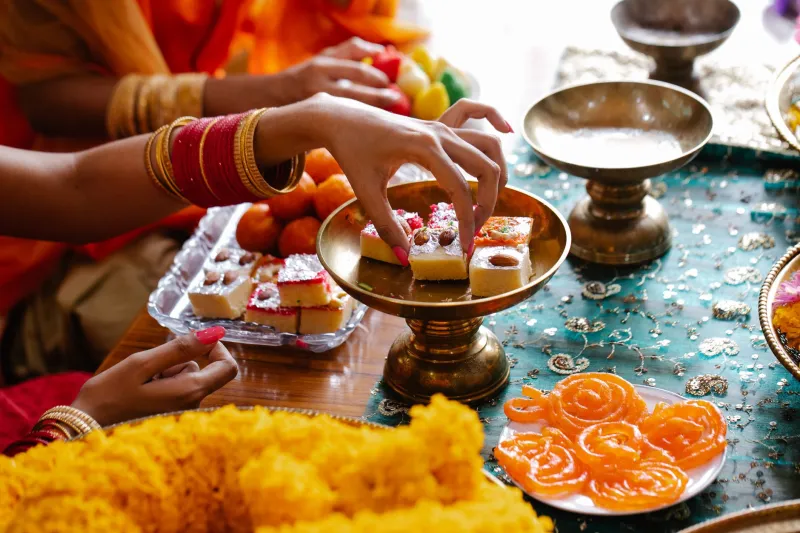
The sweet counters are where confidence pays off. You do not need to know every variety, but you should know that most mithai is sold by weight. Ask for 250 grams, half a kilo, or a mixed box. Pointing at trays and saying “a bit of that, a bit of that” works too, but a number gets you a neater result and a faster transaction.
If you are unsure, ask what is fresh today. Staff will usually tell you. If you are buying for a group, say so — they will often suggest a balanced box rather than six pieces of the same thing. Do not prod the sweets. Use the tongs or let the server handle it. And if you are offered a taster, take it or decline politely; either is fine, but a clear yes or no is better than a vague smile.
One more thing: a box of mithai is a gift in Leicester. If you are buying for a colleague, a neighbour or a dinner invitation, ask for a box rather than a bag. It is the difference between “I picked this up” and “I thought of you.”
The chai question, and how to ask for more
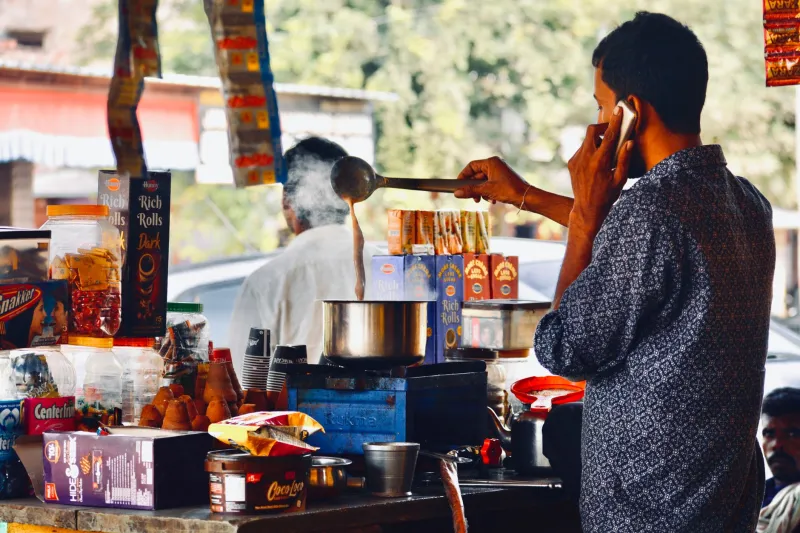
Chai on Belgrave Road is not a complicated ritual, but it does have a tempo. Small cups, strong tea, often served at the counter or brought to your table. If you want another, ask for another. “One more chai, please” is all it takes. Do not assume it is a free refill; in most places you will be adding it to the bill, and that is perfectly normal.
At peak times, drink up and make room. A chai is not a licence to occupy a table for an hour while a queue forms. If you want to linger, go mid-afternoon when the pace softens and the staff have time to chat. That is also the best moment to ask what is good today, or what a particular sweet is made from. Curiosity is welcome; timing is everything.
Cash still matters at some counters
Card machines are common, but not universal. Some smaller counters and sweet shops still prefer cash, or have a minimum spend for cards. Keep a tenner in your pocket and you will sail through. It also helps with the small stuff: a single cup of chai, a bag of snacks, a quick top-up of something you spotted on the way out.
Tipping is not a big performance here. Rounding up is a nice gesture; leaving a couple of pounds on a table is appreciated but not expected. The real courtesy is being ready to pay when you reach the till, rather than hunting for a card while everyone waits.
Ordering a thali without the panic
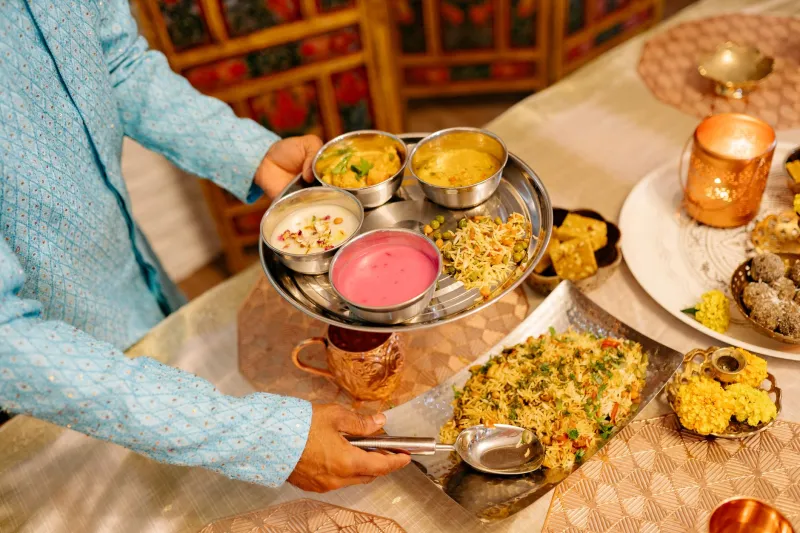
A thali can look like a lot. It is. That is the point. The set meal usually arrives with small bowls, breads, rice and something sweet, and the kitchen has already done the balancing for you. If you are unsure what is included, ask. If you want it less spicy, say so — “less spicy, please” is understood — but do not expect it to be bland. The heat is part of the pleasure.
Eat with your hands if you are comfortable; use cutlery if you are not. No one is marking you. If you are sharing a table, keep your phone off the table and your elbows in. And if you cannot finish, ask for a box. Taking food home is normal, sensible and quietly encouraged.
The table-sharing rule
In a busy restaurant, you may be asked to share a table. Say yes if you are happy to; say no if you are not. If you do share, keep it easy: a nod, a brief hello, no running commentary on what the other person is eating. Belgrave Road is sociable, but it is not a theme park. The best regulars know when to chat and when to leave people to their dal.
The bill, the goodbye and the point of it all
When you are finished, ask for the bill rather than waiting for it to appear. Say thank you on the way out. A simple “that was lovely” goes a long way. You do not need to learn Gujarati or Hindi to be polite, though a warm “thank you” in any language is never unwelcome.
None of this is gatekeeping. The Mile is not trying to keep anyone out. These are just the small habits that make a busy, friendly, slightly chaotic high street work — and once you know them, you stop looking like a visitor and start looking like someone who knows where to stand, what to order and when to ask for one more chai.